“Harvest to Come” / 《穀雨小滿》
究屋是我常去的古物店,在這種地方做展覽感覺很好。房間有一排西曬的鋁窗,窗戶本身還沒舊到可以做成買賣,但它引入的日線可以為室內物件添上一種光輝,一種在古物店內透過大量年份與風格錯置後才得以容易看見,日光反射自物件的光輝。
我在《徒勞作為一種方法》這件作品裡提出了一種對於詩性方法論的可能性。徒勞在那裏被我定義成是「徒勞而無功,付出與收穫不平衡的一種生產狀態。」但我的命題並不總是能夠精確。我想開啟多一些詩性方法的可能:「留戀作為一種方法」及「材料作為一種方法」是我這次在展覽裡所做的嘗試。
Jiū Space is an antique shop I visit often, and it feels fitting to hold an exhibition in a place like this. The room has a row of aluminum windows facing the west. The windows themselves are not old enough to be objects of trade, yet the lines of sunlight they draw into the space add a certain radiance to the interior objects—a kind of glow that becomes more easily perceptible in an antique shop, where years and styles overlap and dislocate in abundance, allowing the reflected daylight to reveal itself through the surfaces of things.
In my work “be in vain” I proposed a possible methodological approach to poeticity. There, I defined futility as “a mode of production in which effort and outcome are disproportionate—labor that leads to little or no result.” Yet my propositions are not always definitive or precise. I hope instead to open up more possibilities for poetic methods. “linger as Method” and “Material as Method” are the two approaches I explored in this exhibition.
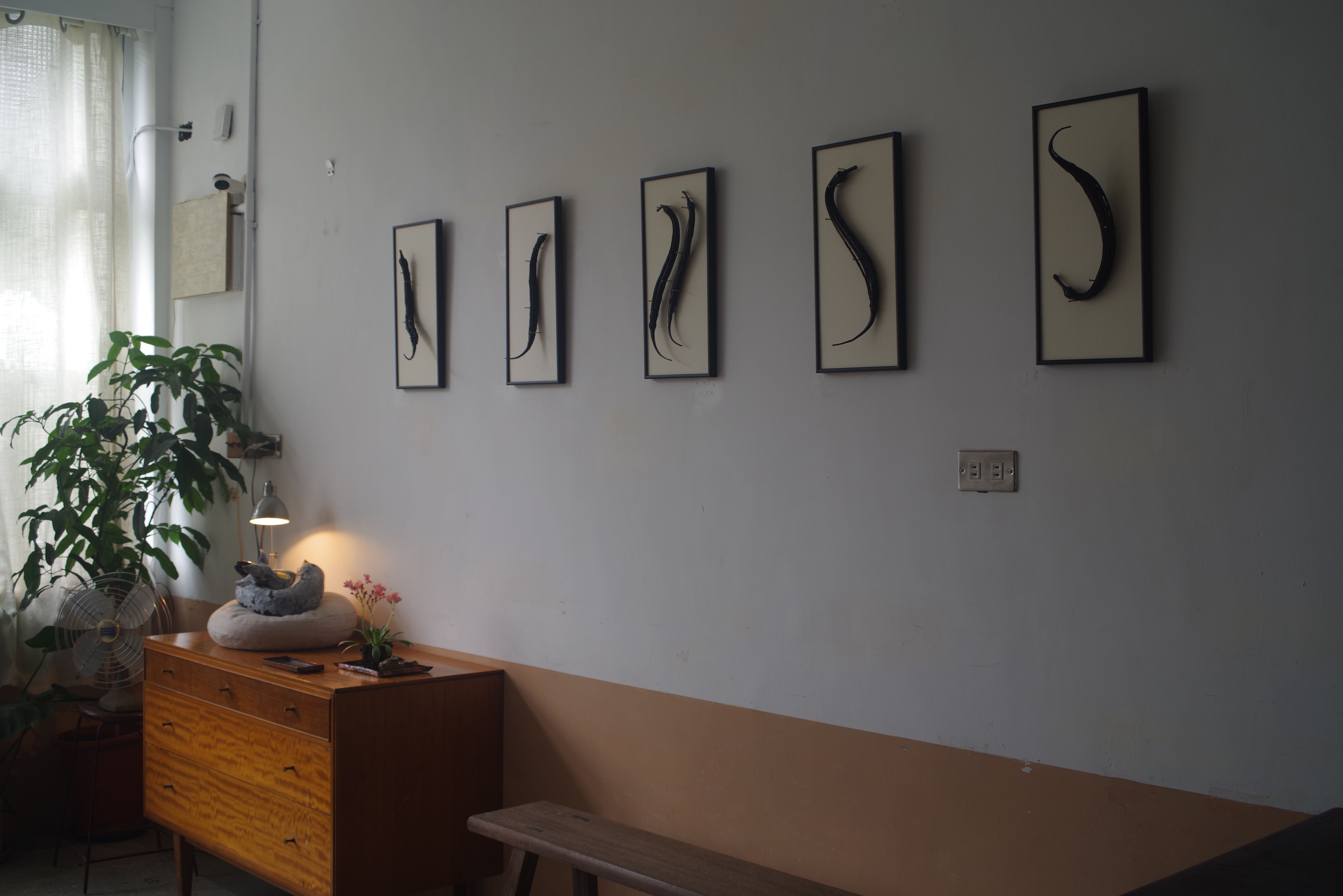
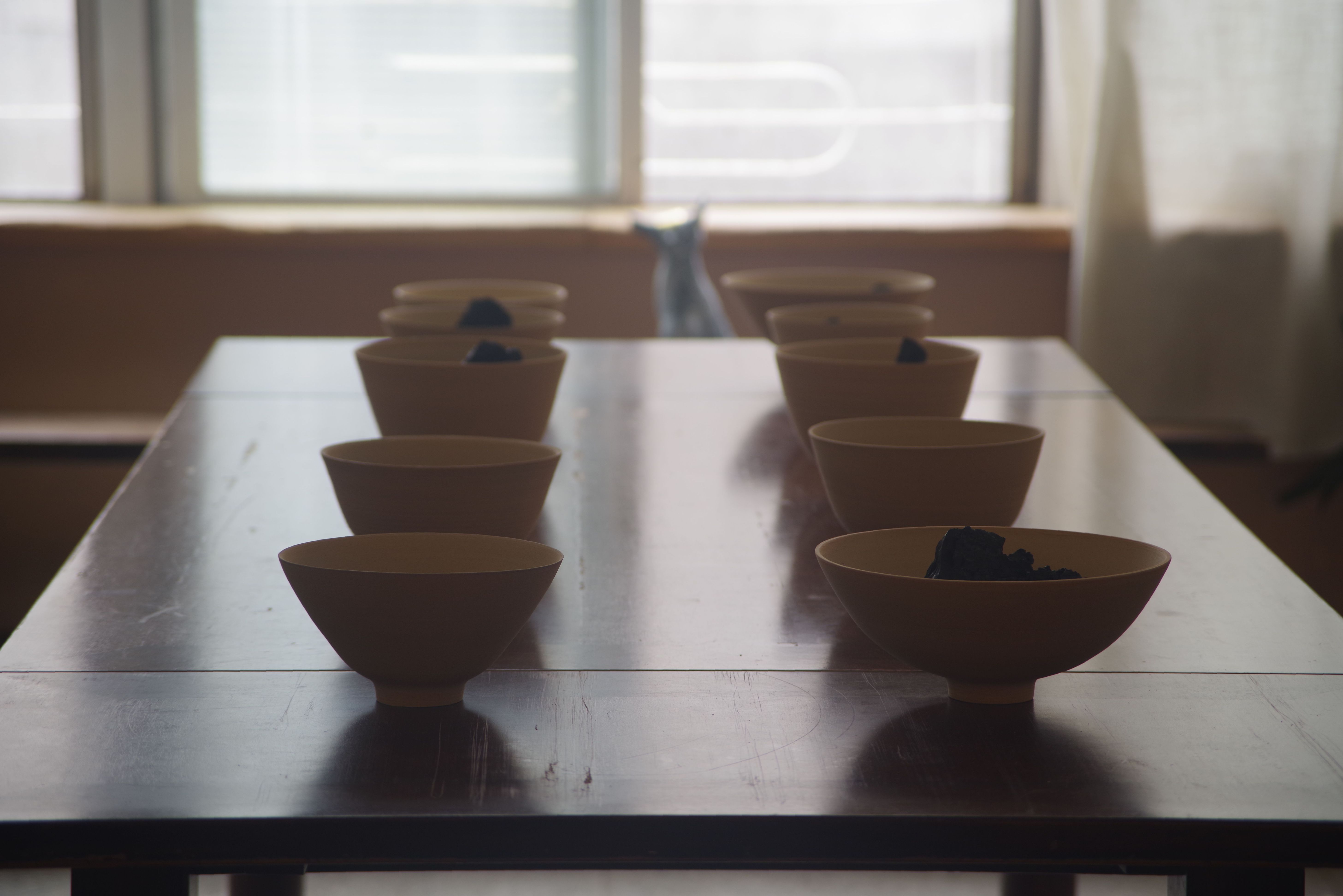
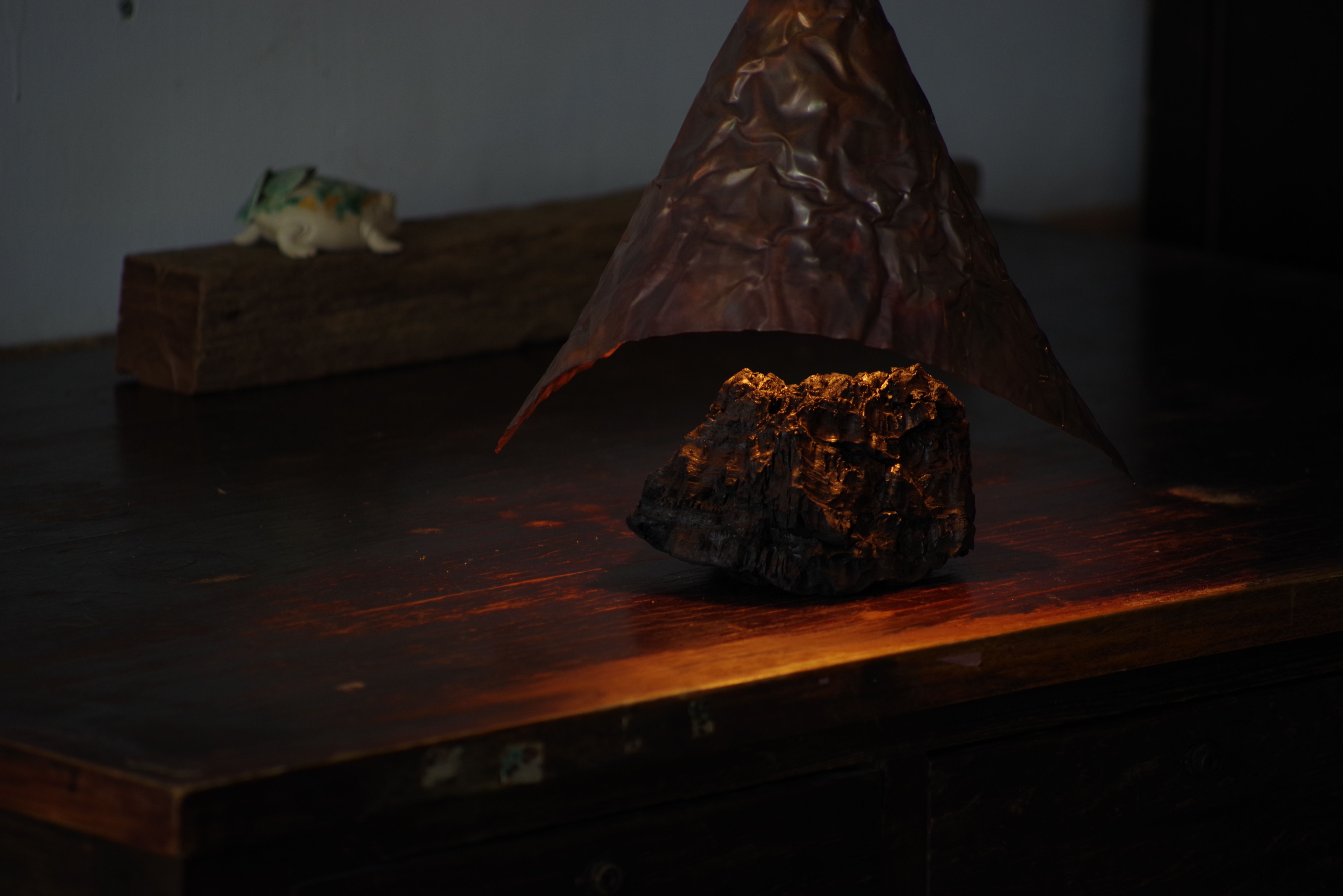
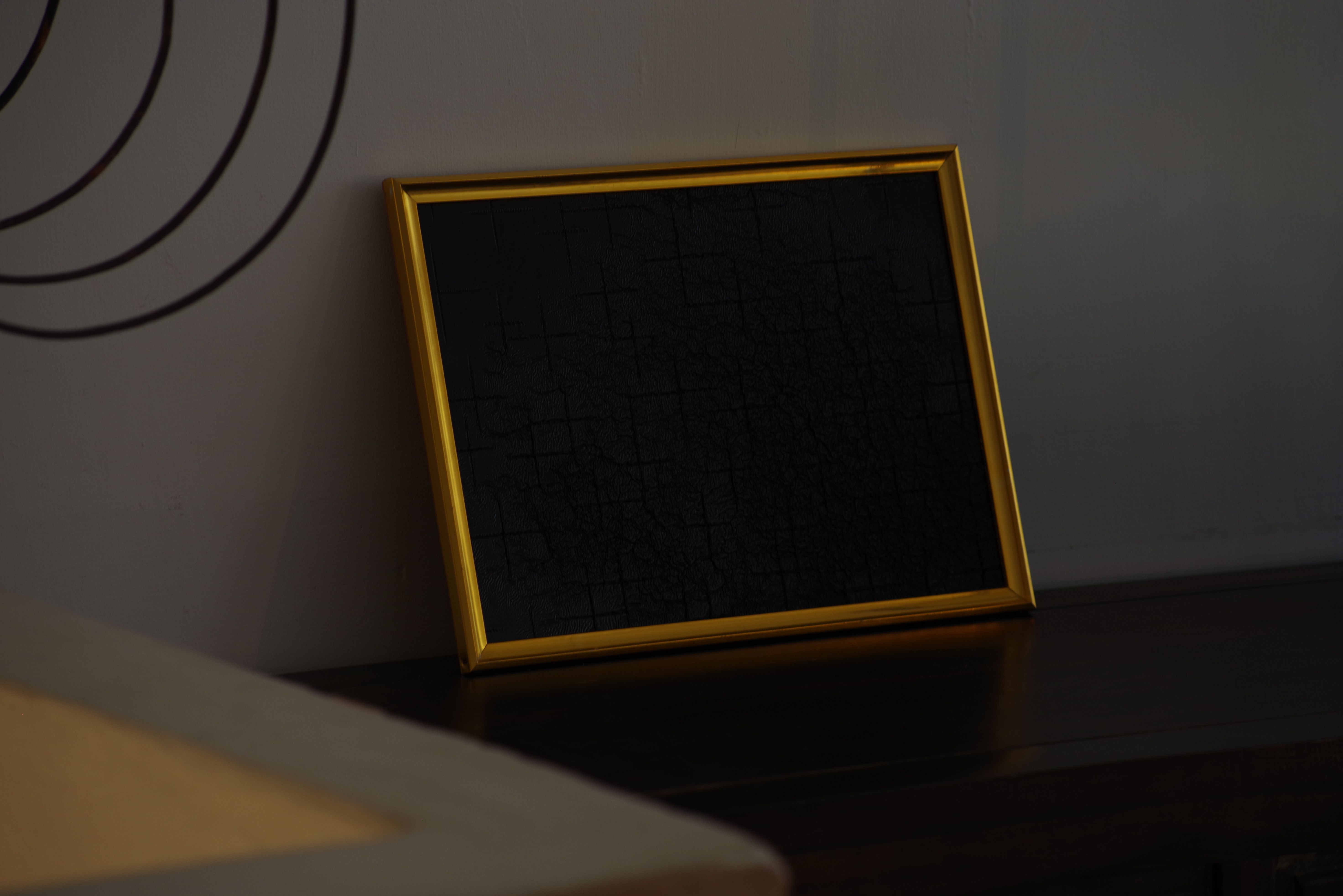
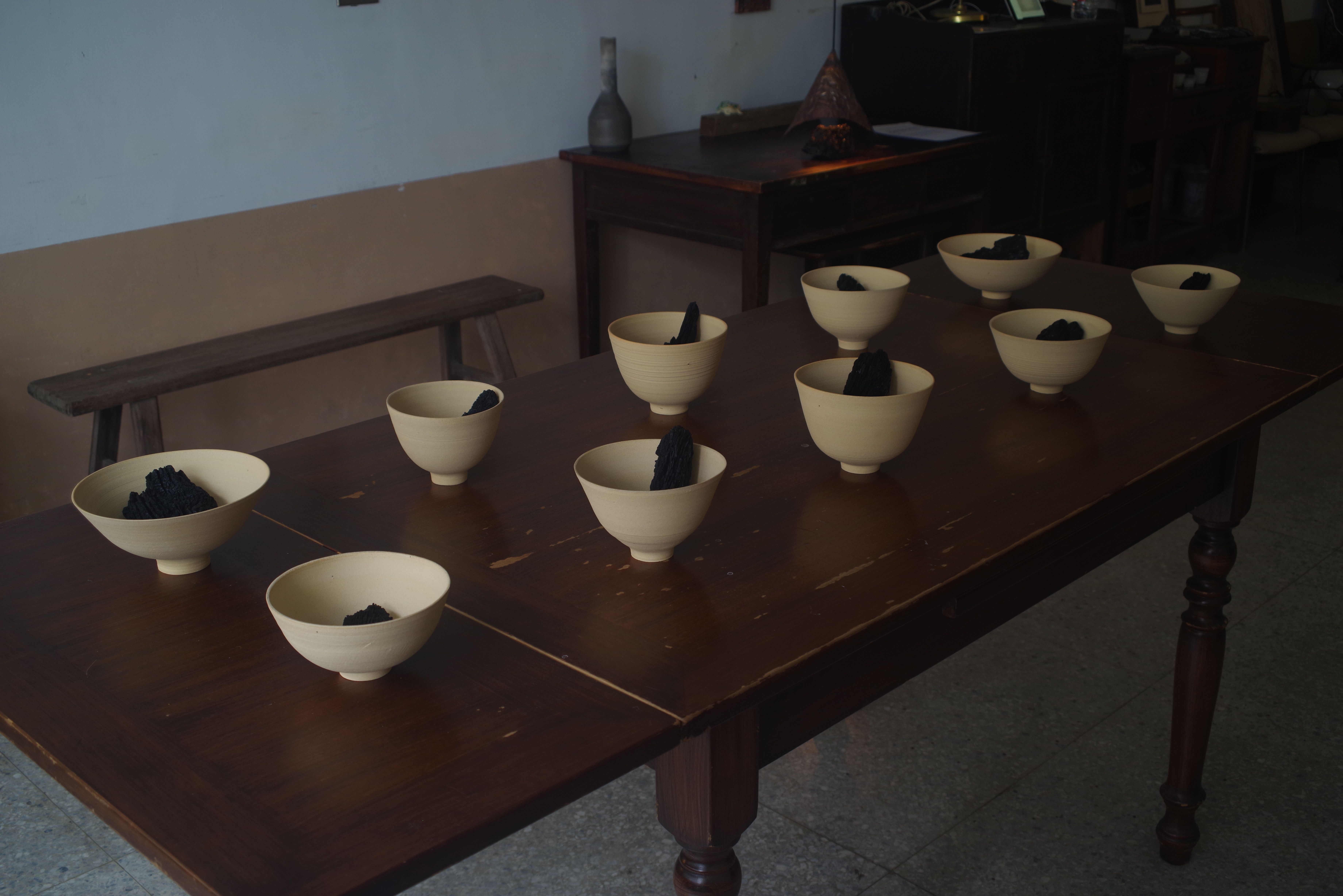
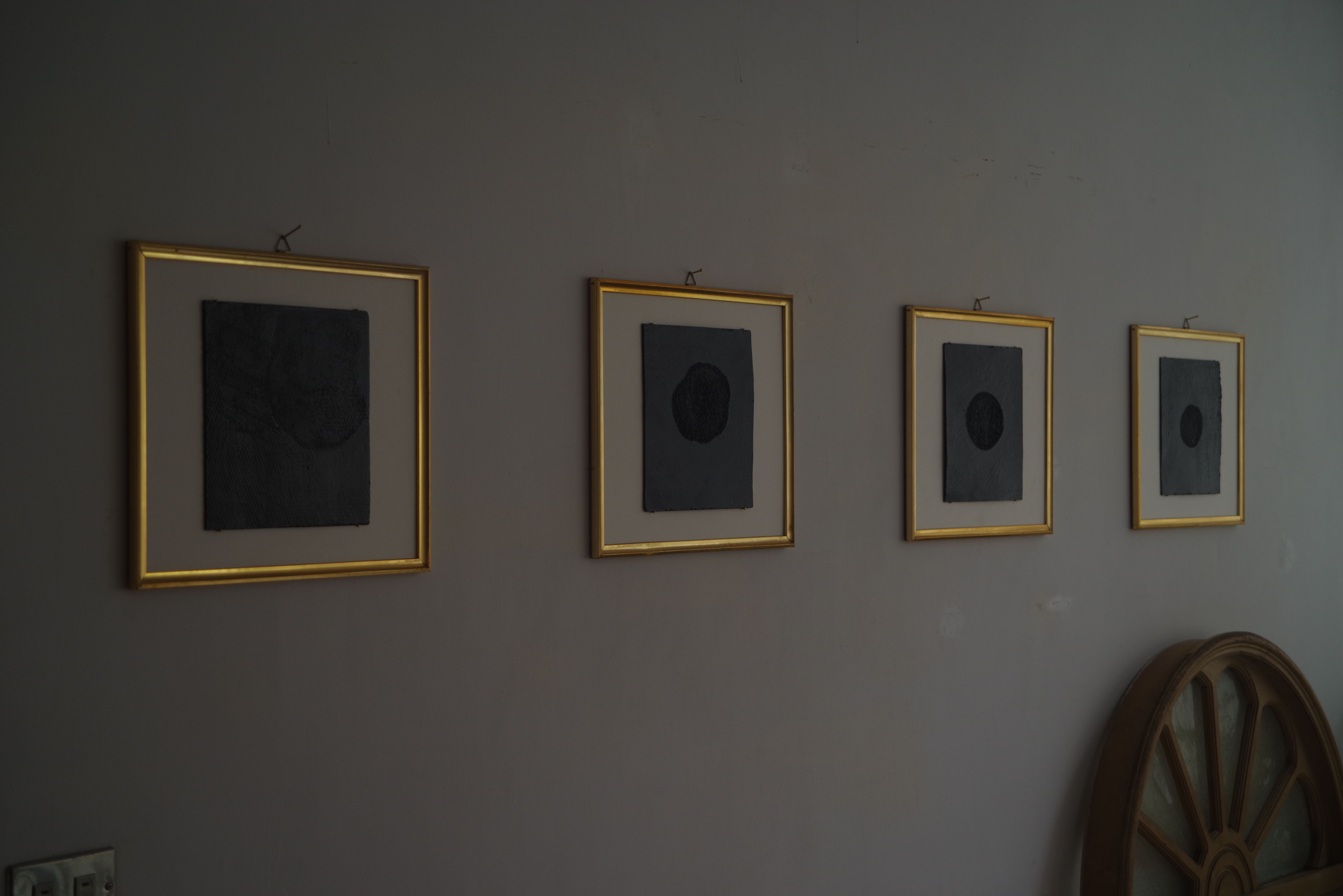


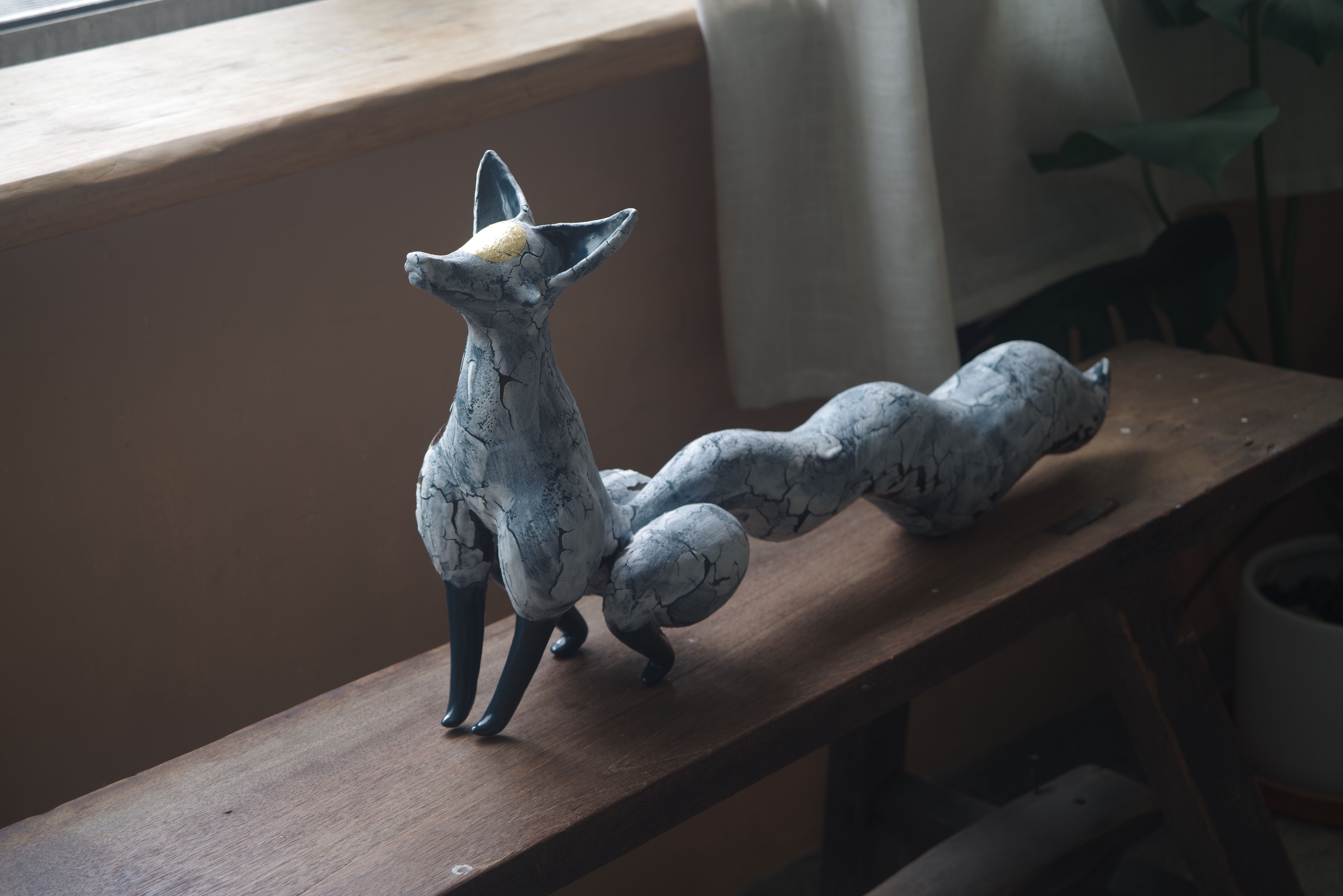

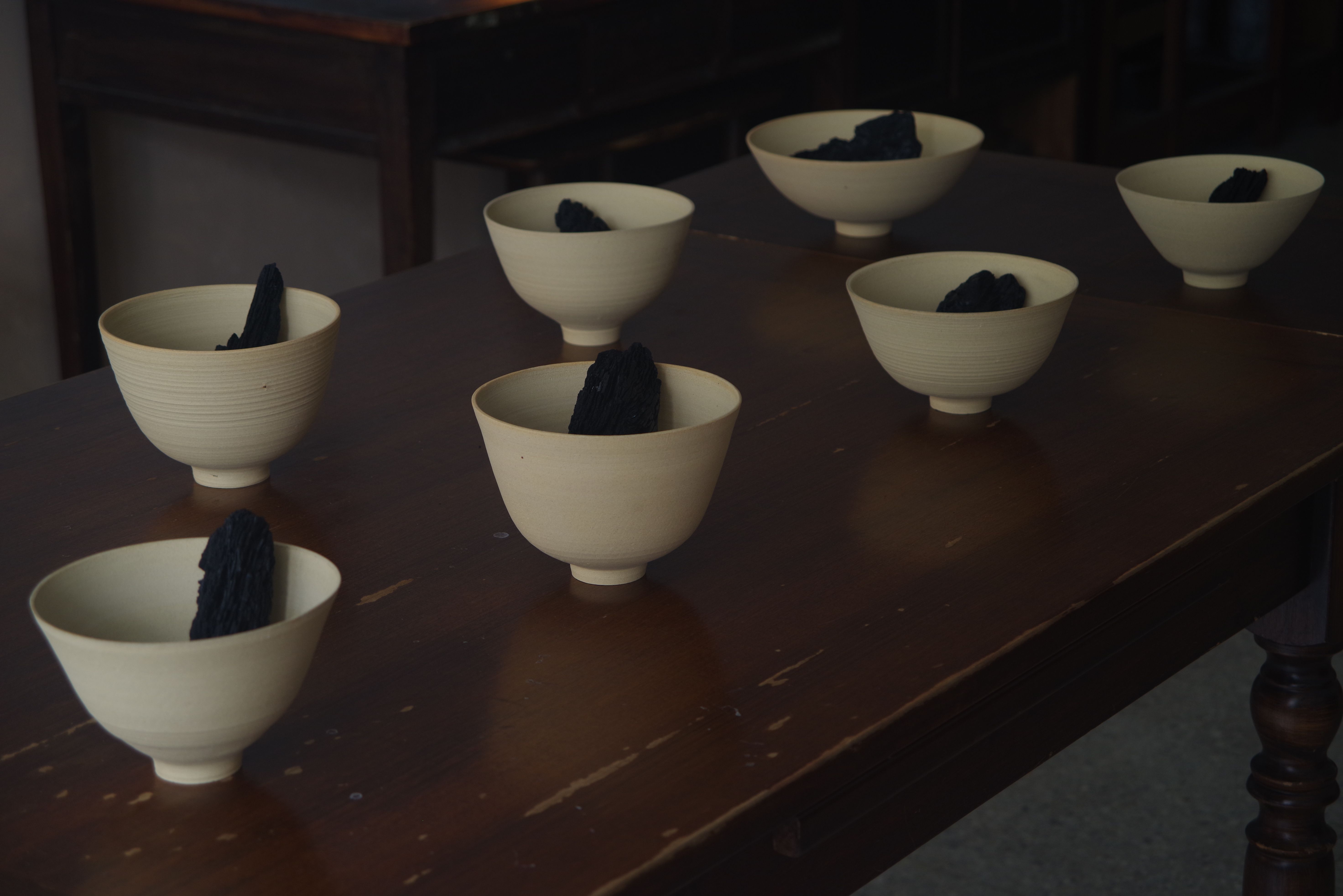

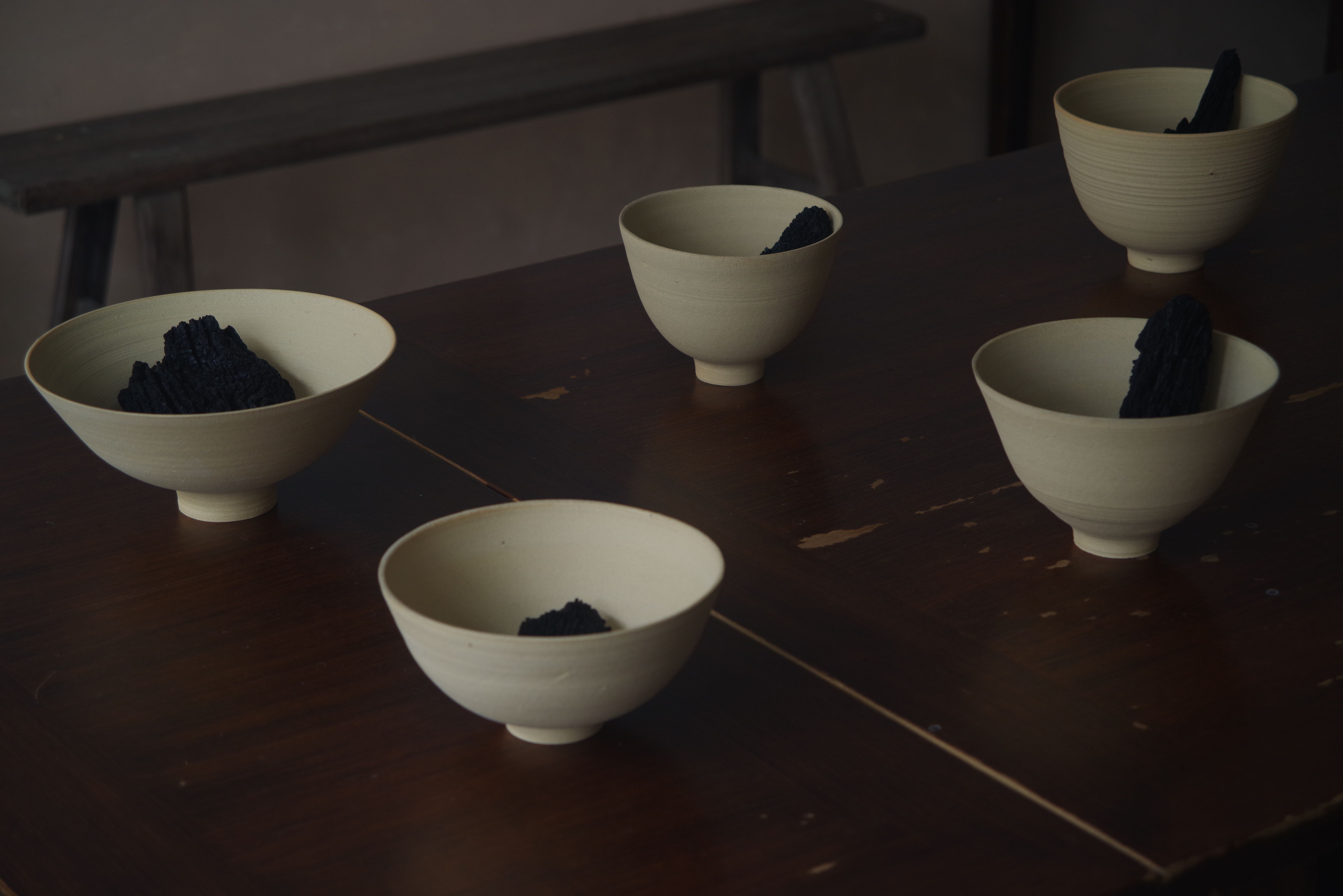
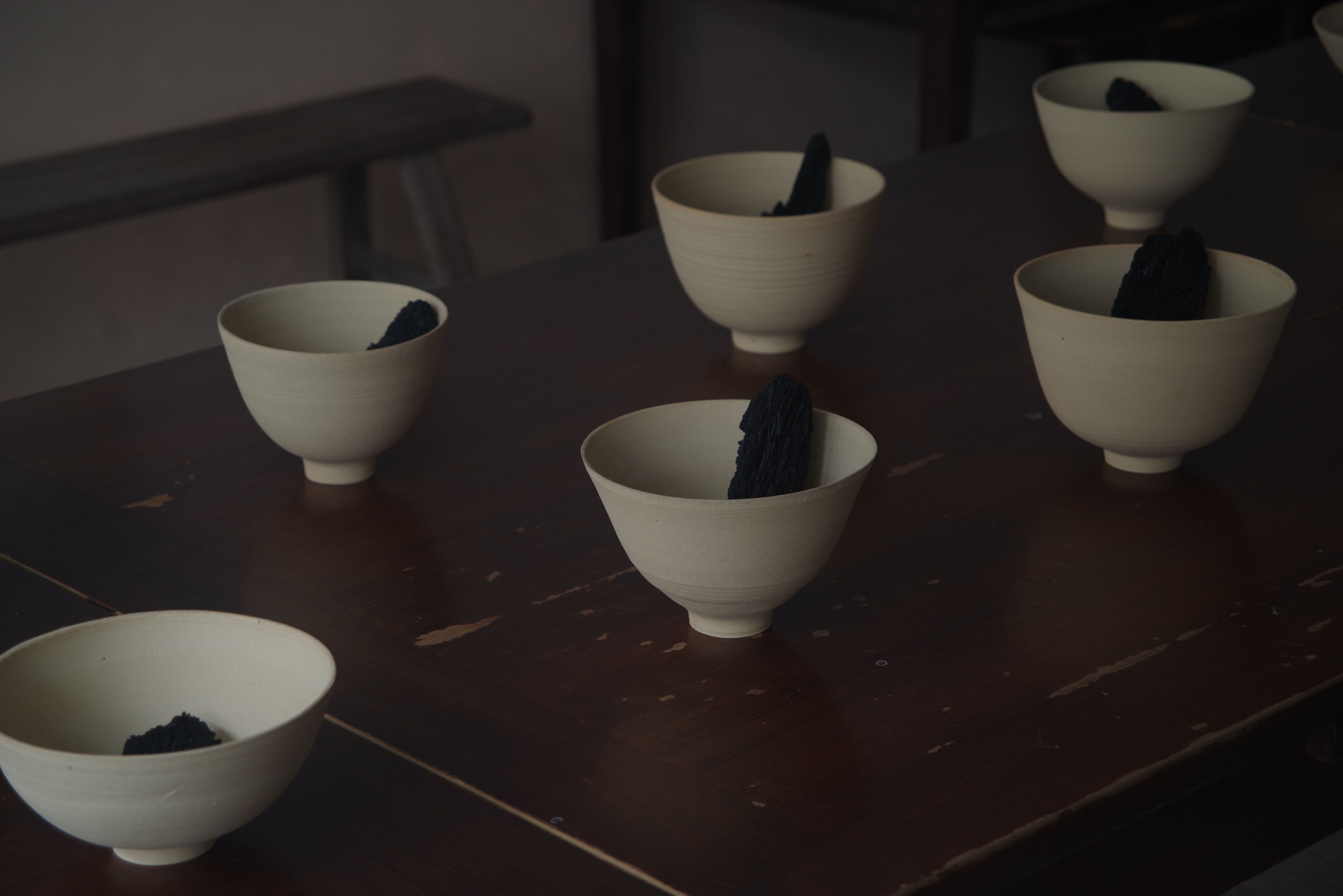
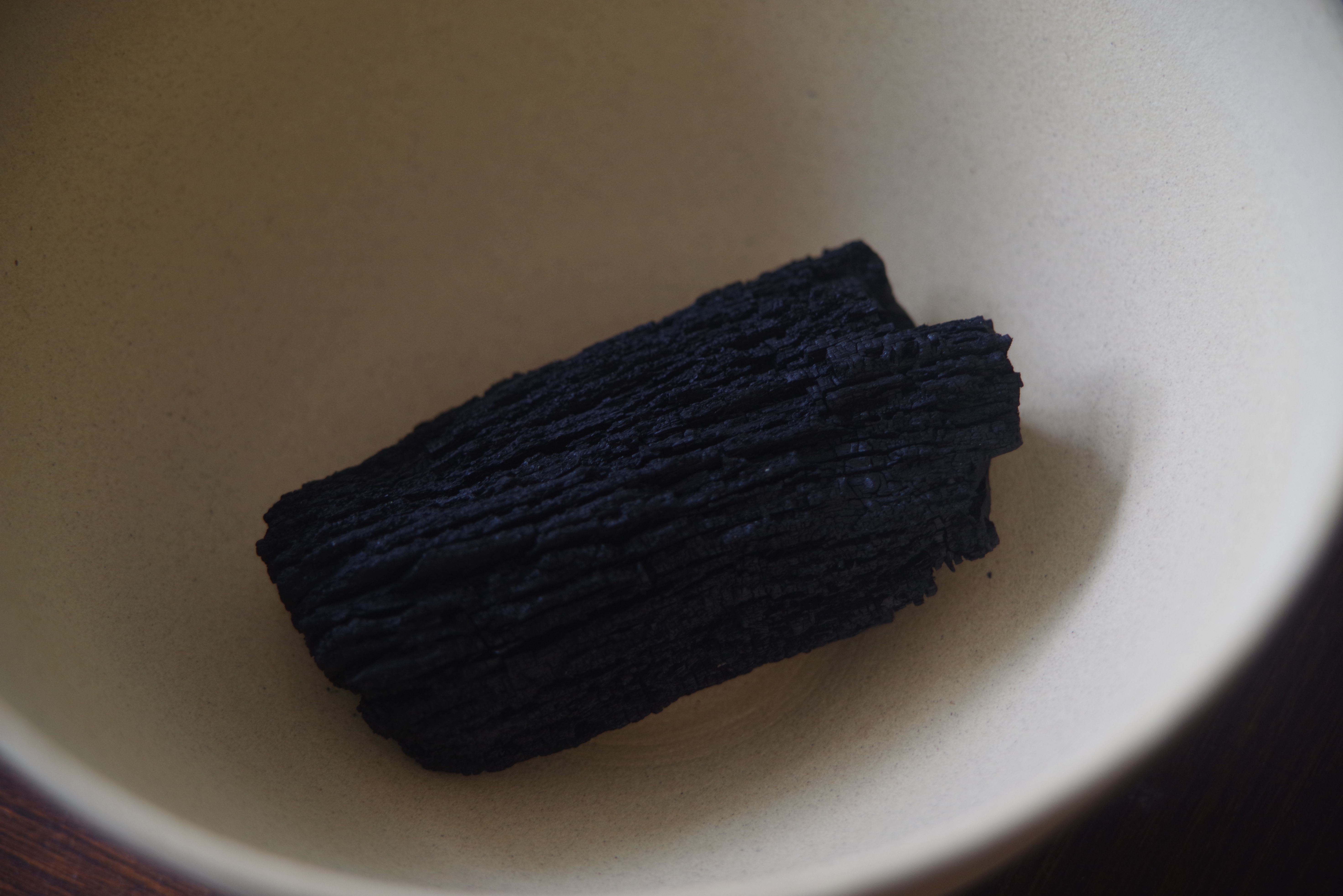
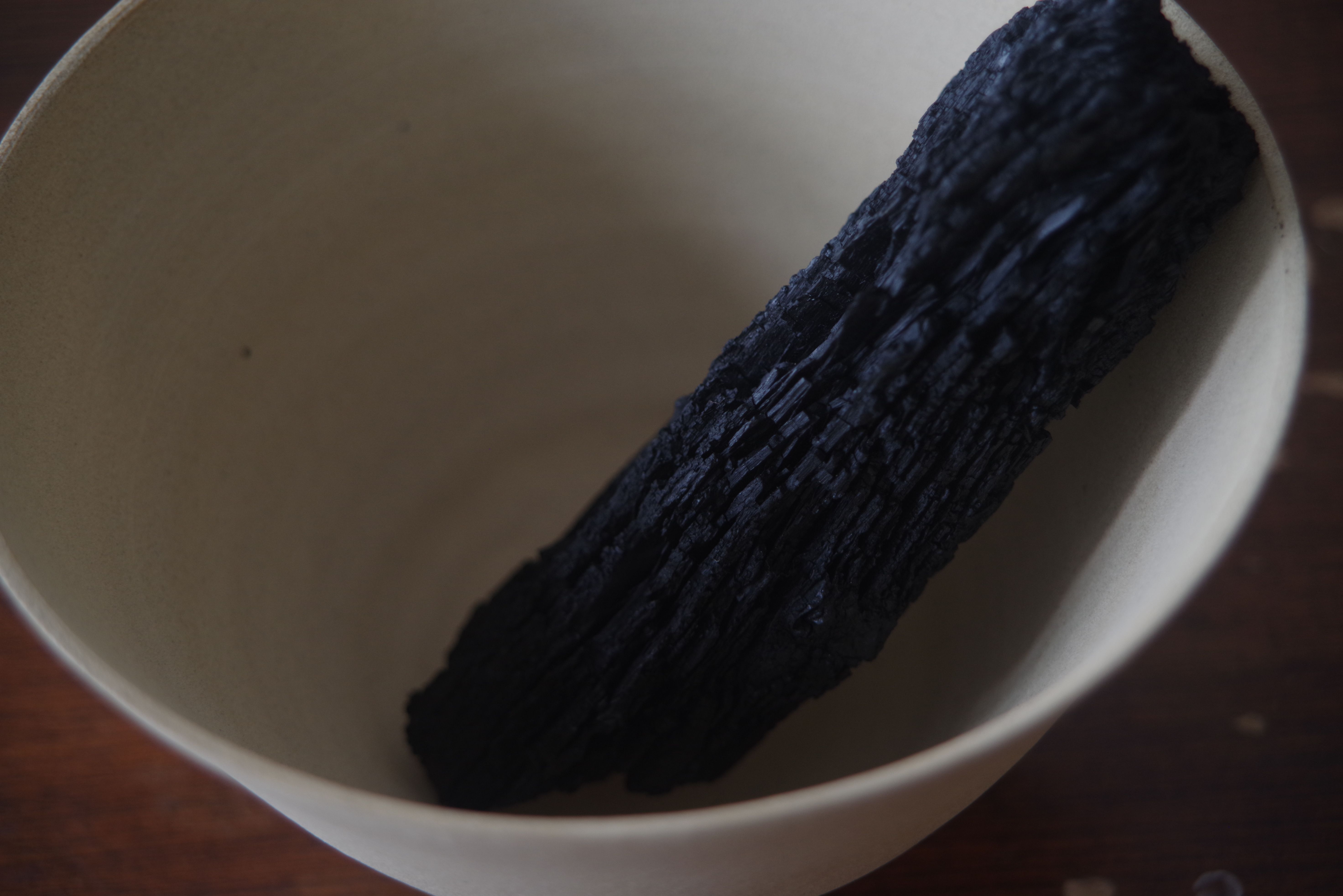

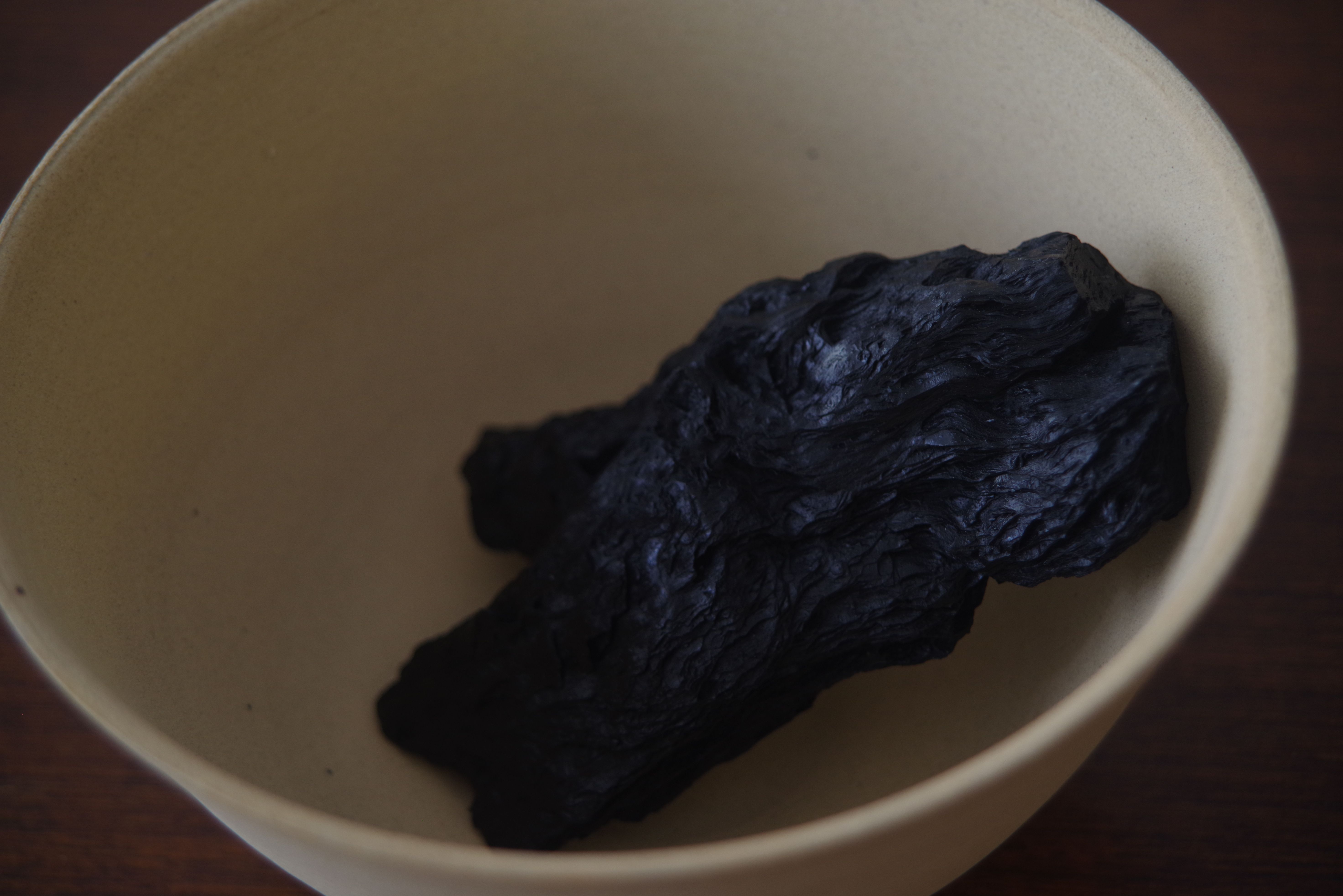


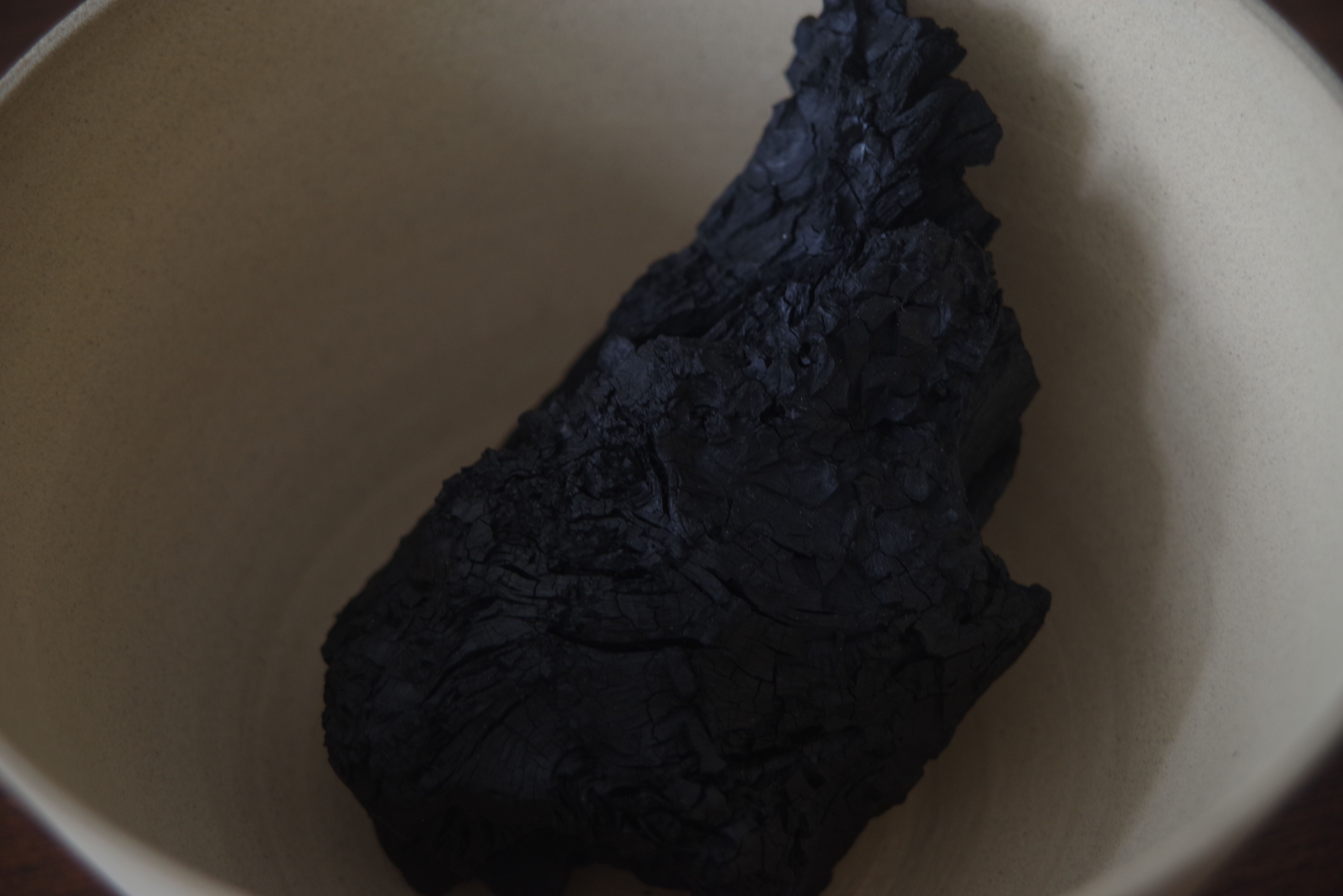
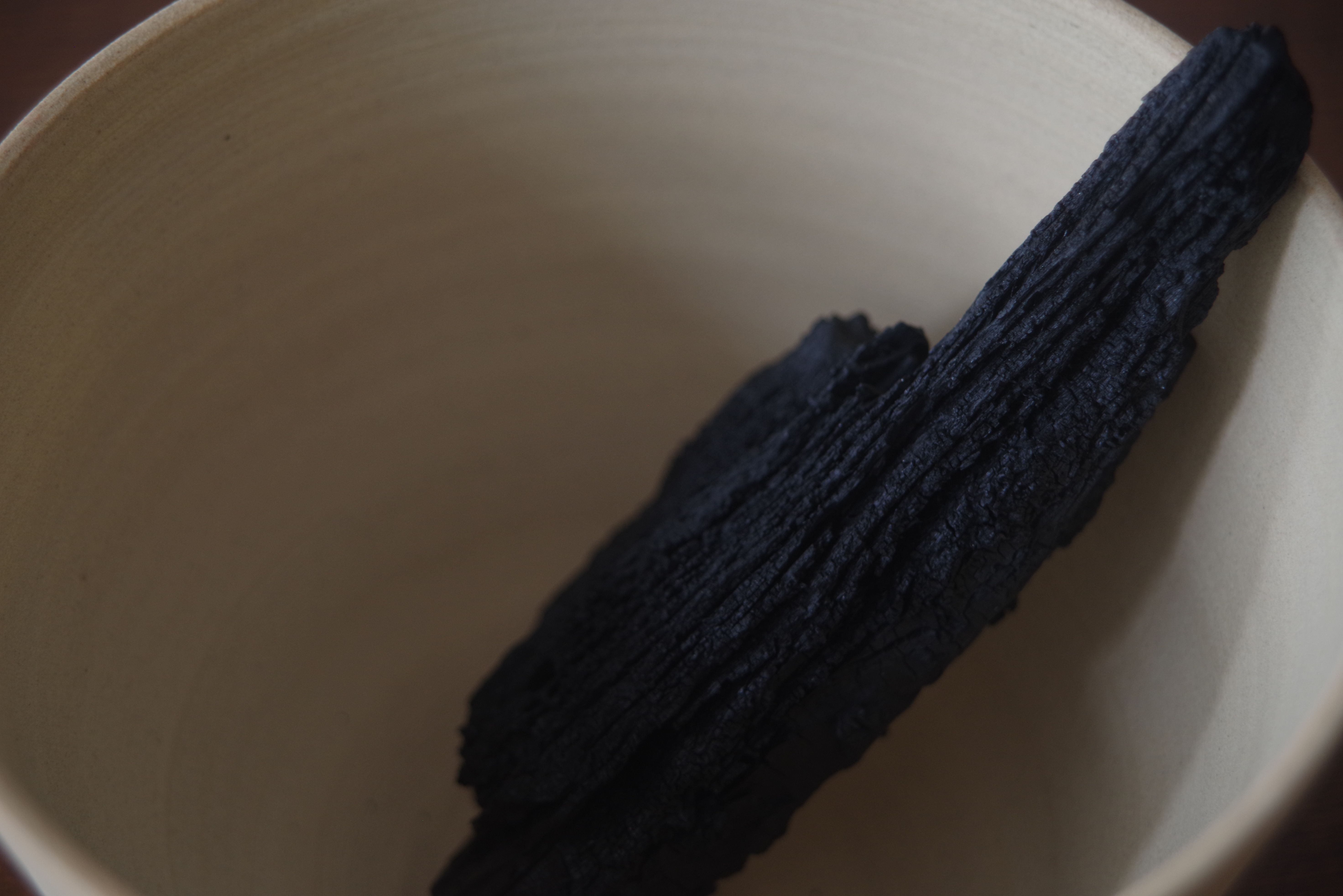
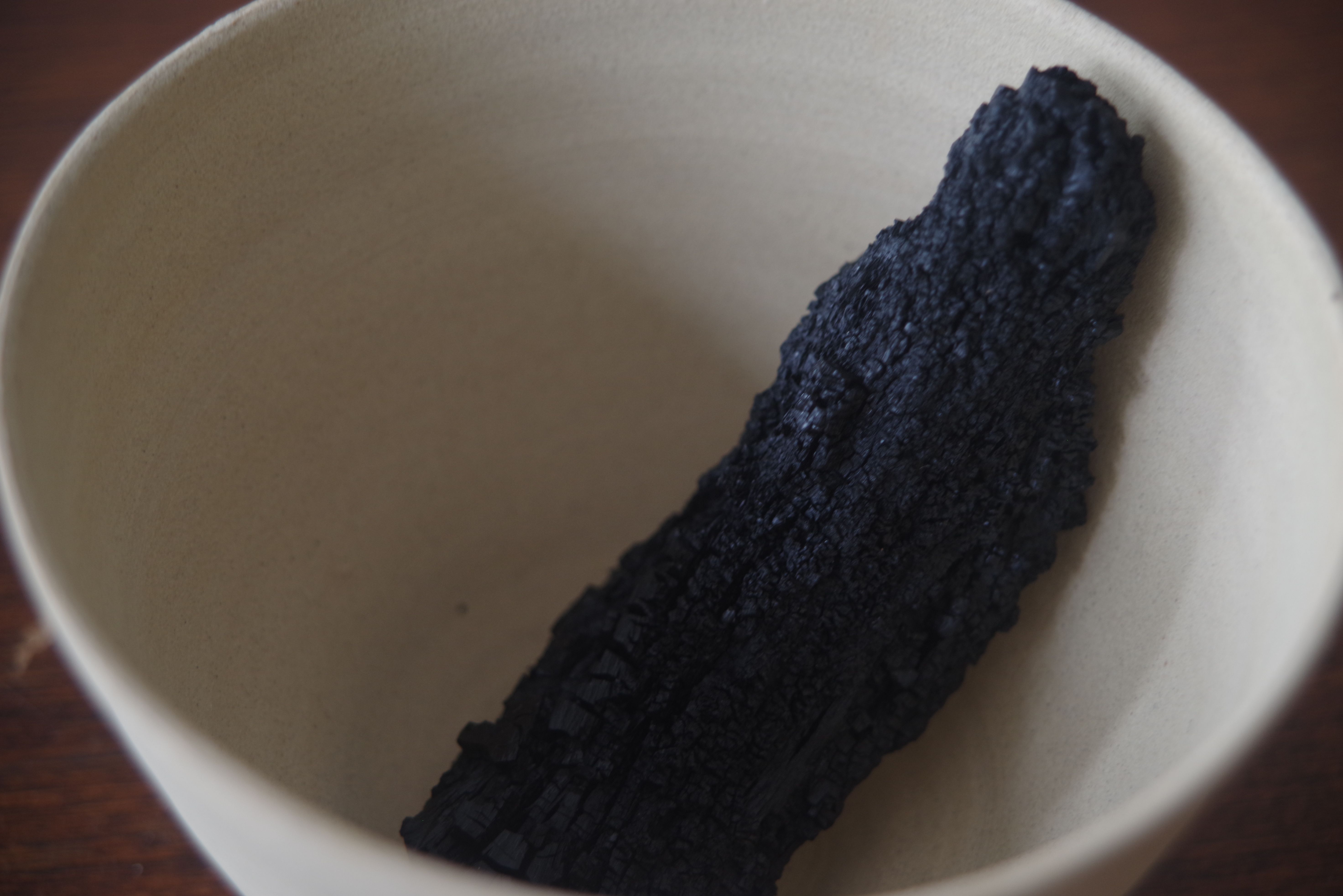
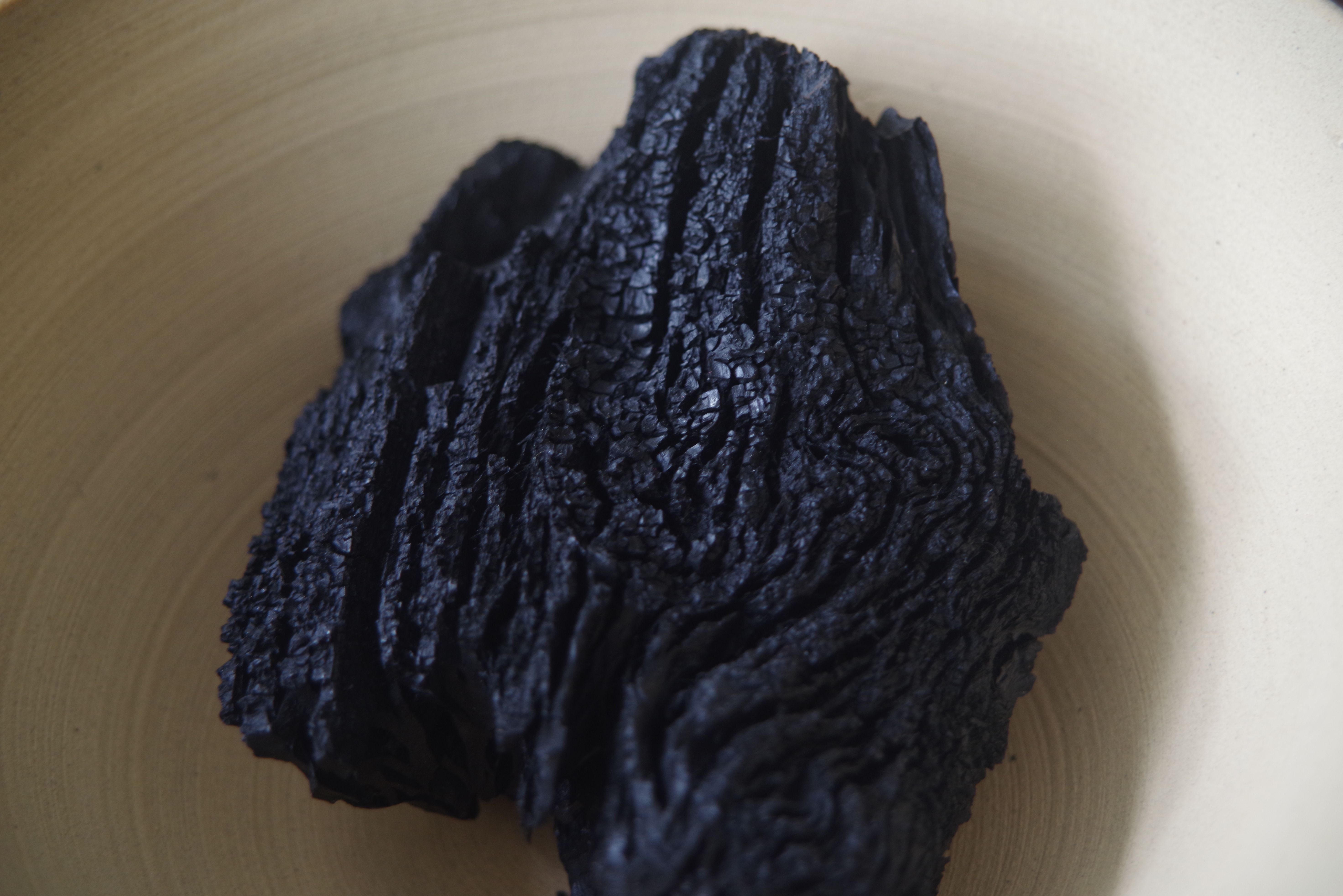
"Harvest to Come" , Jiū Space , Taipei , Taiwan
2023
雕塑土陶碗、龍眼木炭、生漆、秋葵、銅、鋁框裱紙背
bowl made of sculpture clay , charcoal , natural lacquer (URUSHI) , okra, copper , aluminium frame
bowl made of sculpture clay , charcoal , natural lacquer (URUSHI) , okra, copper , aluminium frame